


Views: 0 Author: Site Editor Publish Time: 2026-01-07 Origin: Site


Have you ever watched a performer trip over a cable on stage? Or perhaps you’ve seen a public speaker tethered to a podium, unable to walk around and engage with their audience. These scenarios highlight exactly why audio technology evolved to cut the cord.
The ability to move freely while projecting your voice is a game-changer for professionals in almost every industry. Whether you are a musician, a fitness instructor, or a corporate presenter, removing physical constraints allows for a more dynamic and engaging performance.
This article explores the mechanics, types, and essential uses of cordless microphones to help you decide if it is the right tool for your audio setup.
Before looking at specific use cases, it helps to understand the basic technology. Unlike a traditional wired microphone that sends an electrical signal through a cable directly to the sound system, a cordless microphone uses radio waves.
The system consists of two main parts:
The Transmitter: This is built into the handheld microphone or the bodypack worn by the user. It converts audio into radio signals.
The Receiver: This box sits near the sound mixer. It catches the radio signal and converts it back into audio.
This technology, often utilizing UHF (Ultra High Frequency) bands, provides a stable connection without the physical limitation of a wire.
From massive stadiums to small classrooms, the applications for these devices are vast. Here is a breakdown of where they are used most effectively.
This is the most recognizable use case. Lead singers and performers need to own the stage. A cordless microphone allows them to dance, jump, and interact with the crowd without the safety hazard of trailing cables. High-end models, like "True Diversity" systems, are essential here to prevent signal dropouts during energetic movements.
Corporate presenters and motivational speakers often prefer to walk the stage rather than stand behind a lectern. This movement helps keep the audience engaged. A wireless handheld mic allows for Q&A sessions where the microphone can be easily passed between audience members.
Reporters doing "man on the street" interviews cannot be restricted by cables connected to a camera van. Wireless systems allow them to capture news in real-time, even in chaotic environments.
Imagine trying to teach a high-intensity interval training (HIIT) class while holding a wired microphone. It’s impossible. Fitness instructors rely heavily on wireless headset systems so their hands are free to demonstrate exercises while their voice remains clear over the music.
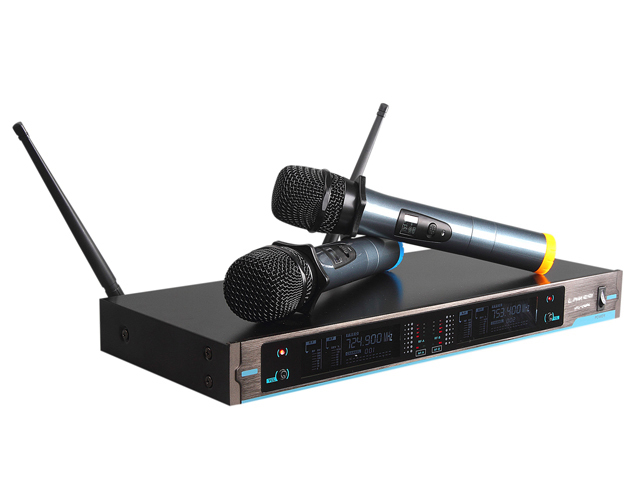
Not all wireless systems look the same. Depending on what the microphone is used for, the form factor changes.
This looks like a standard stage microphone but has the transmitter and battery built into the body. It is ideal for singers and interviewers who need to pass the mic back and forth.
For those asking, "how do I hide the microphone?", the Lapel cordless microphone is the answer. This is a tiny mic that clips onto a collar or tie. It connects via a thin wire to a bodypack transmitter hidden in a pocket or on a belt. These are the standard for television anchors, theater actors, and church leaders who need a discreet look.
Similar to the lapel system, these connect to a bodypack. However, the microphone is worn on a head frame that keeps the capsule near the mouth. This provides consistent volume levels even when the user turns their head, making it perfect for dancers and drummers.
Choosing between wired and wireless depends on your specific environment. Below is a comparison to help you weigh the pros and cons.
Feature | Wired Microphone | Cordless Microphone |
|---|---|---|
Mobility | Restricted by cable length (usually 20-50ft). | Unlimited movement within signal range (often 300ft+). |
Setup Time | Fast. Plug in and play. | Requires frequency syncing and battery checks. |
Reliability | Extremely high. No interference issues. | High, but susceptible to radio interference if not tuned correctly. |
Power Source | Powered by the cable (Phantom power). | Requires batteries (AA or rechargeable). |
Cost | Generally lower. | Higher due to transmitter/receiver technology. |
Stage Clutter | High risk of tripping hazards. | Clean, professional appearance. |
If you are looking to upgrade your audio setup, you need equipment that offers stability and clarity. Professional systems often use "True Diversity" technology, which utilizes two antennas to ensure the receiver always picks the strongest signal, eliminating dead spots.
For example, the Pro-u2988 True Diversity Wireless Stage Performance Microphone is designed specifically for demanding environments. It features UHF transmission with 80 selectable frequency points per channel. This allows multiple microphones to operate simultaneously without crossing signals. With a durable aluminum handheld construction and advanced ACT (Automatic Channel Targeting) technology, it bridges the gap between ease of use and professional performance.
Yes, but they must operate on different frequencies. If two microphones try to use the exact same radio frequency, you will hear loud screeching or static. Systems like the Pro-u2988 offer multiple channels to easily manage this.
This depends on the quality of the system. Entry-level consumer gear might get 50 feet, while professional cordless microphones can easily reach 300 feet or more, provided there is a clear line of sight.
In the early days of audio, yes. However, modern digital and UHF wireless systems provide audio quality that is virtually indistinguishable from wired counterparts for live sound applications.
Most professional handheld transmitters will run for 8 to 10 hours on a fresh set of alkaline batteries or a full charge. It is always best practice to swap in fresh batteries before a major performance.
Deciding to go wireless is about balancing budget with freedom. If you are a studio podcaster sitting at a desk, a wired mic is likely sufficient. However, for anyone on a stage, in a classroom, or at a house of worship, the ability to move freely engages the audience in a way that static presentations cannot.
By understanding the different types—from handhelds to the discreet Lapel cordless microphone—and selecting a system with robust frequency options, you can ensure your message is heard clearly, no matter where you stand in the room.


