


Views: 0 Author: Site Editor Publish Time: 2026-01-28 Origin: Site


Have you ever attended an event where the music felt flat, the vocals were muffled, or the bass was non-existent? It’s a frustrating experience that can ruin the atmosphere of a concert, a conference, or a club night. The culprit is often inadequate audio equipment. While high-end home audio is great for your living room, it simply cannot handle the demands of a large venue or a live performance. This is where a professional speaker system becomes essential.
Investing in professional audio equipment isn't just about volume; it's about clarity, reliability, and coverage. Whether you are setting up a sound system for a house of worship, a touring band, or a permanent installation in a bar, understanding the nuances of professional gear is critical. This guide answers the most common questions about selecting the right equipment, helping you navigate the complex world of wattage, amplifiers, and frequency response to find the perfect sonic match for your space.
The first question many buyers ask is simple: why can't I just use my high-end stereo speaker setup for a live event? While consumer audio gear has advanced significantly, the design philosophy behind a home stereo system is fundamentally different from professional audio reinforcement.
A stereo speaker is designed for "near-field" or "mid-field" listening in a controlled environment with good acoustics, like a living room. Manufacturers color the sound to make it pleasing to the ear at lower volumes. In contrast, a professional speaker (often called a PA speaker) is built for raw performance and durability. They are designed to project sound over long distances and withstand the rigors of travel and high-volume usage without distorting or blowing a component.
Feature | Home Stereo Speaker | Professional Speaker |
|---|---|---|
Primary Goal | Nuanced, pleasant listening at low-to-moderate volumes. | High output, wide coverage, and durability at high volumes. |
Durability | Fragile aesthetic materials (wood veneers, cloth grilles). | Rugged materials (plywood, molded plastic, metal grilles). |
Connectivity | RCA, 3.5mm aux, standard speaker wire. | XLR, TRS (1/4 inch), SpeakON connectors. |
Projection | Designed to fill a small room. | Designed to throw sound to the back of a hall or outdoor space. |
Understanding this distinction is vital. Using a home system for a professional application usually results in damaged equipment and a disappointed audience.
This depends entirely on the type of speakers you choose. In the world of professional audio, speakers generally fall into two categories: active (powered) and passive (unpowered).
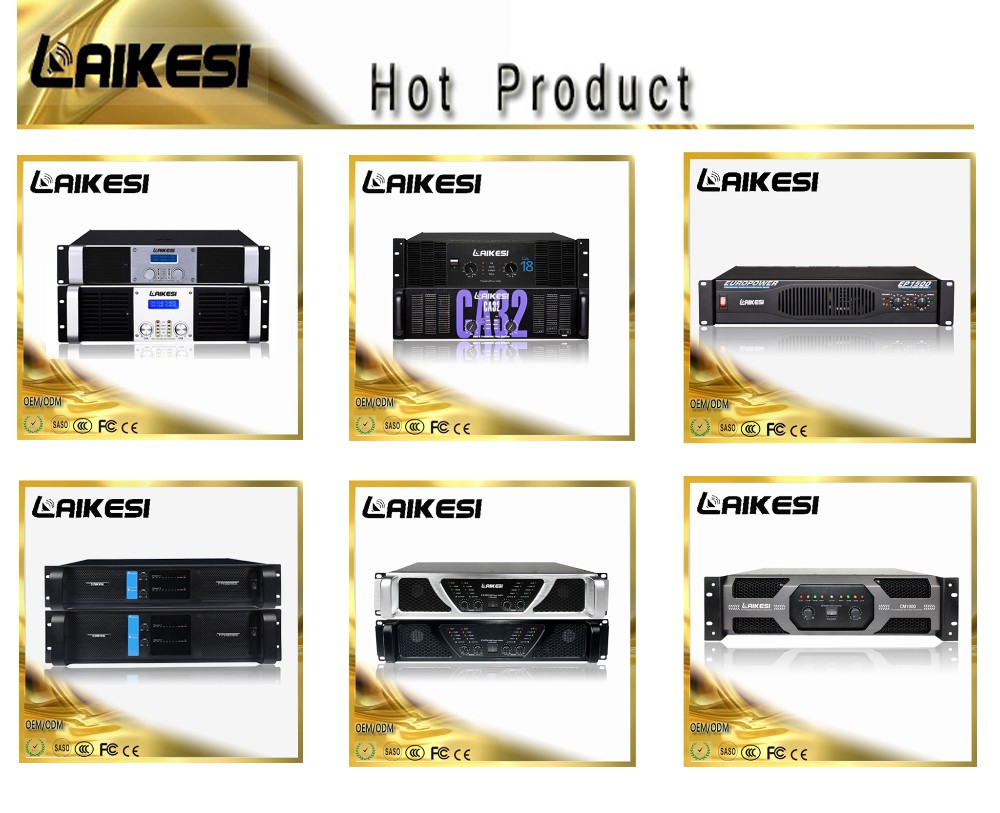
If you opt for passive speakers, the answer is a resounding yes—you absolutely need a separate speaker power amplifier. Passive speakers are essentially boxes containing the drivers and a crossover network, but they have no internal power source. They require an external amplifier to boost the audio signal from your mixer to a level that can drive the speakers.
Matching a speaker power amplifier to a passive speaker requires careful attention to specifications. You need to match the impedance (measured in Ohms) and ensure the amplifier provides enough headroom (wattage) to drive the speakers cleanly without clipping, which can damage the drivers.
On the other hand, active speakers have the amplifier built directly into the speaker cabinet. This simplifies the setup process significantly, as the manufacturer has already perfectly matched the internal amp to the drivers. For many portable setups and mobile DJs, active speakers are the preferred choice because they reduce the amount of heavy gear you need to haul around.
Reading a spec sheet can feel like deciphering a foreign language if you aren't an audio engineer. However, three main specifications will tell you most of what you need to know about a professional speaker: Power handling (Watts), Sensitivity (dB), and Frequency Response (Hz).
Power Rating (RMS vs. Peak): Ignore the "Peak" wattage, which is often a marketing number representing the absolute maximum power a speaker can handle for a split second before exploding. Focus on RMS (Root Mean Square) or "Continuous" power, which indicates what the speaker can handle over a sustained period.
Sensitivity (SPL): This is arguably more important than wattage. Sensitivity measures how efficiently a speaker converts power into volume. A speaker with higher sensitivity will play louder with the same amount of power than one with low sensitivity.
Frequency Response: This tells you the range of sounds the speaker can reproduce, from deep bass (low numbers like 40Hz) to high treble (high numbers like 20kHz).
Application | Frequency Emphasis Needed | Recommended Gear |
|---|---|---|
Speech / Conferences | Mid-range clarity (vocals). | 10" or 12" 2-way speakers. Subwoofers usually not needed. |
Acoustic Music | High-end detail and clear mids. | High-quality 12" mains. |
DJ / EDM / Hip Hop | Heavy low-end (Bass). | 15" mains plus dedicated 18" subwoofers. |
Live Rock Band | Full range balance. | 12" or 15" mains with subwoofers for kick drum/bass guitar. |
Even the most expensive professional speaker system will sound terrible if it is set up incorrectly. One of the most common mistakes is placing speakers on the floor or too low. High-frequency sound waves are very directional and are easily absorbed by human bodies. If your speakers are at waist height, the front row of the audience will absorb all the treble, leaving the rest of the room with a muddy, muffled sound.
To fix this, you must elevate your speakers. The high-frequency driver (the tweeter or horn) should be above the heads of the audience. Speaker stands or flying hardware (hanging the speakers from a truss) are essential investments.
Additionally, consider the boundaries of the room. Placing a speaker in a corner will artificially boost the bass frequencies, often resulting in a "boomy" or undefined low end. If you are using a speaker power amplifier with a DSP (Digital Signal Processor) or a digital mixer, you can use equalization (EQ) to correct for these room anomalies, cutting the muddy frequencies to restore clarity.
We touched on this earlier regarding amplifiers, but how do you make the final decision between active and passive systems?
Choose Active Speakers If:
You want simplicity: You plug the microphone or mixer directly into the speaker, plug the speaker into the wall outlet, and you are done.
You have limited space: You don't want to carry a rack of heavy amplifiers.
You are a beginner: You don't want to worry about matching impedance or calculating wattage requirements.
Choose Passive Speakers If:
You have a permanent installation: In a venue like a church or club, running heavy power cables to speakers mounted in the ceiling is difficult. Running lightweight speaker wire to a central amplifier rack is much easier.
You want centralized control: If a speaker blows or an amp fails, it is easier to troubleshoot if the amps are in a rack next to you, rather than suspended 20 feet in the air.
You want scalability: You can add more speakers to a system relatively easily by managing the amplifier load.
Selecting the right sound system is a balancing act between budget, portability, and performance. Whether you choose a sophisticated active system for its ease of use or a robust passive rig with a dedicated speaker power amplifier for a permanent install, the goal remains the same: delivering clear, powerful sound to your audience.
By ignoring the marketing hype around "Peak Watts" and focusing on the metrics that matter—like sensitivity and frequency response—you can ensure your investment pays off. A great professional speaker doesn't just make things louder; it connects the performer to the audience in a way that creates a memorable experience. Start with the basics, assess your venue honestly, and choose gear that is built to last.


