


Views: 0 Author: Site Editor Publish Time: 2025-12-18 Origin: Site


If you've ever wondered how professional studios achieve that polished, crystal-clear sound or how live concert venues manage to make every instrument heard perfectly, the answer often lies in one piece of technology: the Digital Sound Processor (DSP).
But what exactly does this powerful tool do, and more importantly, how can it transform your audio setup?
A Digital Sound Processor acts as the brain of an audio system, manipulating digital signals to improve quality, correct issues, and create specific auditory environments. Whether you are a car audio enthusiast, a home theater buff, or a sound engineer, understanding DSP capabilities is the key to unlocking superior sonic performance.
In this guide, we will explore the specific effects a DSP can provide, how they function, and why they are essential for modern audio systems.
At its core, a Digital Sound Processor is a specialized microprocessor designed to perform mathematical functions on digital audio signals. Unlike analog processors that work with electrical voltages, a DSP converts audio into digital data (0s and 1s), processes it with incredible speed and precision, and then converts it back to analog sound for your speakers.
This digital approach allows for complex manipulations that would be impossible, expensive, or prone to noise in the analog realm. From removing background hiss to simulating the acoustics of a cathedral, a DSP handles it all in real-time.
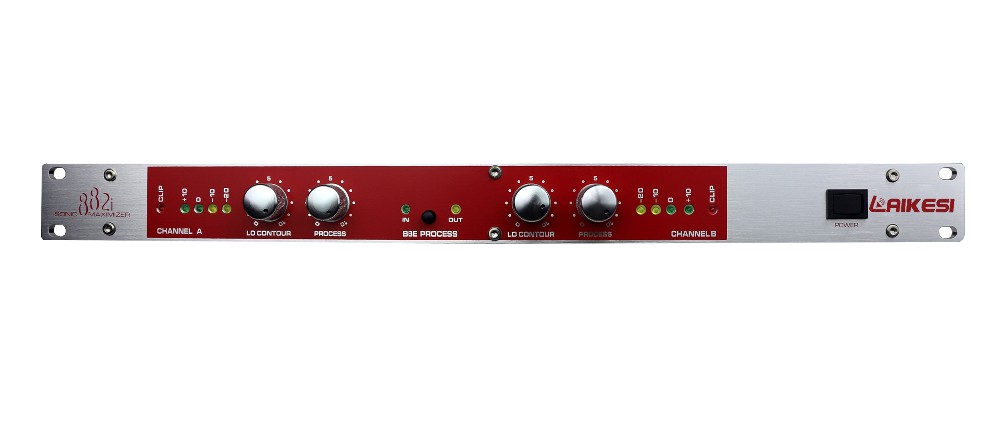
A comprehensive DSP offers a suite of tools designed to sculpt sound. Here are the primary effects and functions you will find in high-quality units like the 882i dual channel BBE sound processor.
What does it do?
Equalization allows you to adjust the balance between frequency components. A DSP provides precise control over specific frequency bands, allowing you to boost the bass, clarify the vocals, or tame harsh treble.
Why do you need it?
Every room and every car interior has unique acoustic properties that can distort sound. EQ helps "flatten" the response, ensuring that what you hear is accurate to the original recording.
What does it do?
In many setups, especially in cars, the listener is not seated perfectly in the center of the speakers. Time alignment delays the sound from the speakers closest to you so that the sound from every speaker arrives at your ears simultaneously.
Why do you need it?
Without time alignment, the soundstage feels disjointed. With it, the music feels like it is coming from a centralized stage in front of you, rather than from the left or right door panel.
What does it do?
Crossovers split the audio signal into different frequency ranges (Highs, Mids, Lows) and send them to the appropriate speakers (Tweeters, Mid-ranges, Subwoofers).
Why do you need it?
Sending deep bass frequencies to a small tweeter will blow the speaker. DSP crossovers protect your equipment and ensure each speaker plays only the frequencies it was designed to handle efficiently.
To help you understand how these features stack up, here is a breakdown of common DSP modules found in professional audio exciters and processors.
Effect / Feature | Function | Best Use Case |
|---|---|---|
Sonic Maximizer | Restores clarity and definition lost during amplification. | Live sound, broadcasting, and instrument racks. |
Signal-to-Noise Ratio (SNR) | Measures signal strength relative to background noise. High SNR (e.g., 115dB) means cleaner sound. | High-fidelity recording and critical listening environments. |
Bypass Mode | Allows the signal to pass through unprocessed. | Comparing the "wet" (processed) and "dry" (unprocessed) signals. |
Lo Contour | Adjusts phase compensation for low frequencies. | Adding punch and depth to bass without muddiness. |
High-end processors, such as the 882i dual channel BBE sound processor, utilize specific algorithms to correct phase distortion. Loudspeakers naturally struggle to reproduce high and low frequencies at the same speed, causing "smearing" where the sound lacks definition.
The 882i addresses this by:
Restoring Brilliance: It aligns the phase relationships between low, mid, and high frequencies.
Boosting Headroom: With +23dBu of headroom, it prevents distortion even at high volume levels.
Process Control: It allows users to dial in the exact amount of processing required, from subtle enhancement to dramatic correction.
A DSP can significantly improve the performance of budget speakers by filtering out frequencies they can't handle and correcting their response curve. However, it cannot fix a physically damaged speaker or make a small driver produce sub-bass frequencies.
Most modern DSPs, especially those for car audio or home racks, are designed with user-friendly interfaces. Professional units like the 882i feature standard XLR and 1/4" inputs/outputs, making them compatible with most mixers and amplifiers.
Passive crossovers use physical components (capacitors and coils) placed between the amp and speaker, which consumes power. DSPs use active crossovers, which split the signal digitally before amplification, resulting in greater efficiency and adjustability.
Whether you are trying to get the perfect mix in a studio or simply want your car stereo to sound like a live concert, a Digital Sound Processor is an invaluable tool. By managing equalization, time alignment, and phase correction, a DSP turns a good sound system into a great one.
Ready to take control of your audio? Explore high-performance options like the 882i Sound Processor to hear what you’ve been missing.


